
VoIP Phone Systems & IP-PBX SIP Trunking
Carrier-grade IP-PBX telephony architecture, redundant SIP trunk routing, Layer 2/3 QoS voice prioritization, and dynamic E911 compliance for modern distributed businesses.
Zero audible jitter or packet drop
Layer 2/3 strict priority queue
Sub-second SIP trunk failover
Automated dispatchable address
Architectural Capabilities & Deliverables
Specific technical interventions, deployment baselines, and governance deliverables included in this practice.
On-premises appliance, cloud-hosted, and hybrid IP-PBX deployments featuring automated multi-level attendants (IVR), department hunt groups, and dynamic holiday routing.
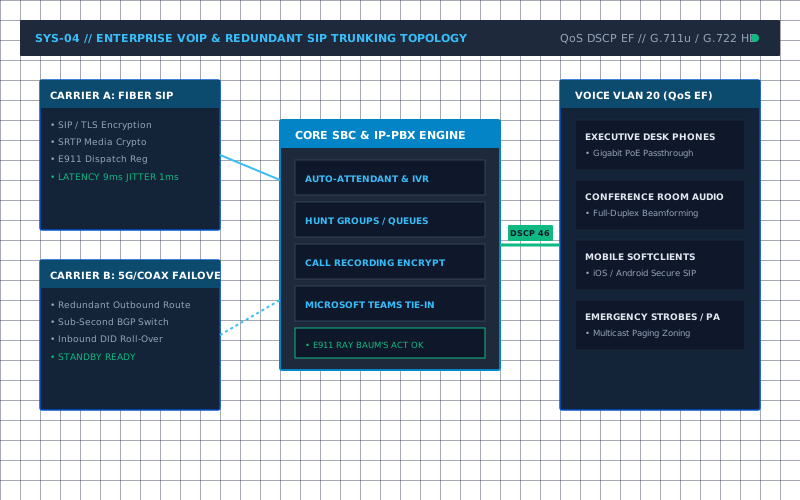
Dual-carrier SIP trunk connections with automated route advance, disaster recovery call forwarding to mobile devices, and uncompressed HD voice audio codecs.
Dedicated 802.1Q voice VLANs configured with 802.1p CoS and DiffServ DSCP 46 Expedited Forwarding (EF) queues to prevent voice stutter during peak file transfers.
Hardened WebRTC and SIP-over-TLS softphones for iOS, Android, macOS, and Windows with push notification wake-up and encrypted audio streams.
Full regulatory compliance with Kari’s Law (direct 911 dialing without prefix) and RAY BAUM’S Act (automated desk-level dispatchable location transmission).
Encrypted call recording archives, voicemail-to-email transcription, and bi-directional CRM screen pop integration for sales and customer support teams.
Supported Technology Stacks & Protocols
Vendor-neutral integration across enterprise hardware, hypervisors, and cloud environments.
- • 3CX Titanium / Enterprise
- • FreePBX / Asterisk Engine
- • Grandstream UCM Enterprise
- • Yeastar S-Series
- • Yealink T4U / T5 Series Gigabit
- • Poly VVX HD Voice Phones
- • Grandstream GRP Series
- • Fanvil SIP Paging Endpoints
- • Bandwidth.com Direct SIP
- • Telnyx Enterprise Trunking
- • Twilio Elastic SIP
- • Flowroute Carrier Services
- • SIP RFC 3261
- • SRTP (Secure RTP)
- • TLS 1.3 Signaling
- • G.722 HD Audio / Opus Wideband
Regional Logistics Hub: Slashing $3,400/Mo Telecom Bills
A multi-branch distribution business paid $3,400 monthly for legacy copper analog PRI circuits that dropped calls during rainstorms and lacked remote work capabilities.
Steve Cormier deployed a redundant IP-PBX platform with dual active/standby carrier SIP trunks over primary fiber and cellular backup, installed 65 Yealink gigabit PoE desktop phones, and mapped dynamic E911 locations.
Telecom billing reduced from $3,400/mo to $680/mo (80% recurring cost reduction), call completion rate reached 99.999%, and remote staff gained seamless mobile softphone access.
Ready to Architect Your VoIP Phone Systems & SIP?
Direct consultation with a 36-year Principal Systems Architect. Zero sales reps, zero vendor markups, and zero guesswork.